Framed Moss Art: Choosing the Right Preserved Moss for Your Display
What Preserved Moss Is and Why It Matters for Framed Art
Preserved moss is real moss that has been treated to stay soft, green, and alive-looking without needing water or sunlight. Unlike dried moss, which can become brittle and fade, preserved moss keeps its natural texture and color for years if cared for properly. This makes it an ideal material for indoor displays, especially for wall-mounted pieces that you want to look fresh without the upkeep of live plants.
For anyone buying their first framed moss art, the variety of moss types can be confusing. Sheet moss, cushion moss, reindeer moss, and other preserved varieties each have distinct appearances and practical qualities. Understanding those differences helps you choose a piece that fits your space and your expectations for longevity, texture, and visual impact.
Sheet Moss: A Smooth, Ground-Cover Look
Sheet moss grows flat against surfaces in nature, forming a thin, leafy layer. When preserved, it retains that low-profile texture and a deep green color. It works well as a background or base layer in a frame, covering large areas evenly. Sheet moss is flexible and can be cut to fit irregular shapes, making it a popular choice for custom layouts.
One thing to watch for with sheet moss is that it can look slightly more uniform than other types. If you prefer a natural, slightly irregular surface, you might want to mix it with other mosses. Sheet moss also holds up well in low-humidity rooms, but it can dry out and shrink if exposed to direct sunlight or heat vents. Keep your display away from windows and radiators to maintain its appearance.
Cushion Moss: Thick, Plush, and Sculptural
Cushion moss grows in rounded, pillow-like clumps. Preserved cushion moss keeps that three-dimensional shape, adding depth and softness to a design. It feels spongy to the touch and has a rich, vibrant green hue that stays consistent over time.

Because cushion moss is thicker, it works well as a focal point or accent in a composition. It can also be used to create texture contrast against flatter mosses. However, its bulk means it takes up more space in a frame, so you need to plan the layout carefully. Cushion moss can sometimes shed small fragments if handled roughly, but once in place behind glass or within a shadow box, it stays put.
Reindeer Moss: A Unique, Branching Texture
Reindeer moss, despite its name, is actually a lichen. It grows in small, branching clusters that look like tiny coral or miniature shrubs. Preserved reindeer moss is available in a wide range of colors, including natural grays and greens as well as dyed shades like teal, pink, and yellow.
This variety is especially popular in modern and minimalist designs because it adds a distinct, almost architectural texture. It is lightweight and easy to arrange, and it holds its shape well. One consideration is that reindeer moss can be more brittle than sheet or cushion moss, so it should be handled gently during assembly. In a framed piece, it is often used as an accent or scattered among other mosses for visual interest.
Color variation in reindeer moss is something first-time buyers sometimes overlook. Dyed versions can fade over time if exposed to strong light, so consider where you plan to hang the piece. Natural tones tend to be more stable.
How Moss Type Affects Your Framed Display
The choice of moss influences not only the look of your finished piece but also its durability and maintenance. A frame filled entirely with one type of moss can look cohesive but may lack the visual depth that a mix provides. Combining sheet moss as a base with cushion moss accents and a few reindeer moss clusters creates a more natural, layered effect.
Another factor is the frame itself. Deep or shadow-box frames accommodate thicker mosses like cushion moss, while slim frames work best with flat sheet moss. If you are buying a ready-made piece, check the frame depth and ask about the moss types used. If you are assembling a kit, you have more control over the combination.
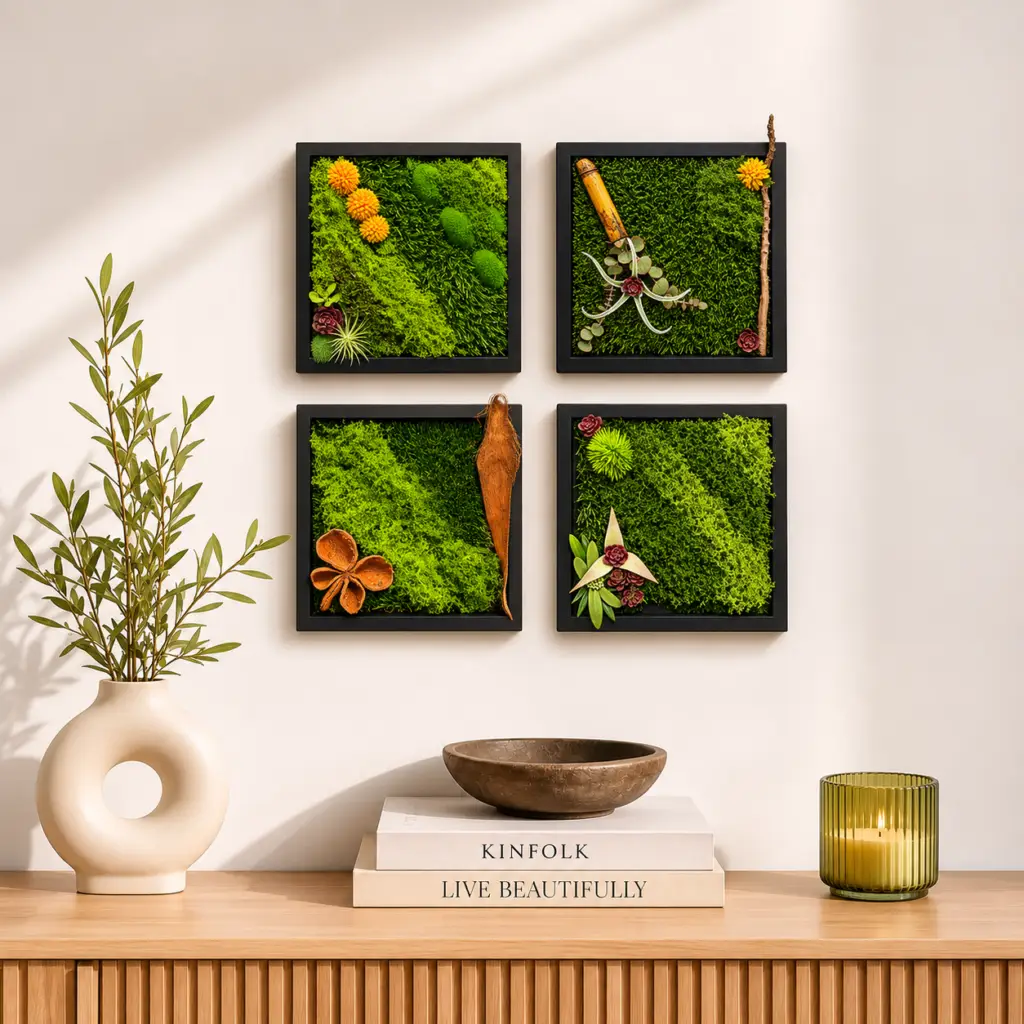
This is where the concept of moss wall art becomes practical rather than abstract. A well-chosen mix of preserved mosses can turn a simple frame into a living-looking composition that stays fresh for years with minimal attention. The key is matching the moss properties to your design goals and the conditions of the room.
Color Variation and Natural Imperfections
Preserved moss is a natural product, so no two pieces are identical. Color can vary slightly between batches, and individual moss clumps may have subtle differences in shade. This is not a flaw but part of the charm. If you are ordering online, look for sellers who show actual photos of the moss or the finished piece rather than generic stock images.
Some mosses are dyed to achieve brighter or more consistent colors. Dyed moss can look striking, but it may require more care to prevent fading. Natural green tones are generally more stable and blend better with other elements. If you are mixing moss types, consider how the colors will work together under your room's lighting.
Surface Texture and How It Affects the Viewing Experience
Texture is one of the most important aspects of a moss display. A piece with only one texture can feel flat, while a mix of smooth, plush, and branching surfaces creates a dynamic visual that changes as you move past it. Cushion moss catches light differently than sheet moss, and reindeer moss casts small shadows that add depth.
When choosing a piece, think about the wall where it will hang. In a hallway with dim lighting, a textured composition will stand out more than a flat one. In a bright room, even subtle texture differences become visible. The frame also plays a role: a dark wood frame can make the moss colors pop, while a light frame blends with the moss for a softer look.
Practical Tips for First-Time Buyers
Before you buy, decide whether you want a ready-made piece or a kit. Ready-made pieces are convenient and let you see the exact combination of mosses. Kits give you freedom to arrange the moss yourself, which can be rewarding if you enjoy hands-on projects. Either way, check what moss types are included and how they are preserved.
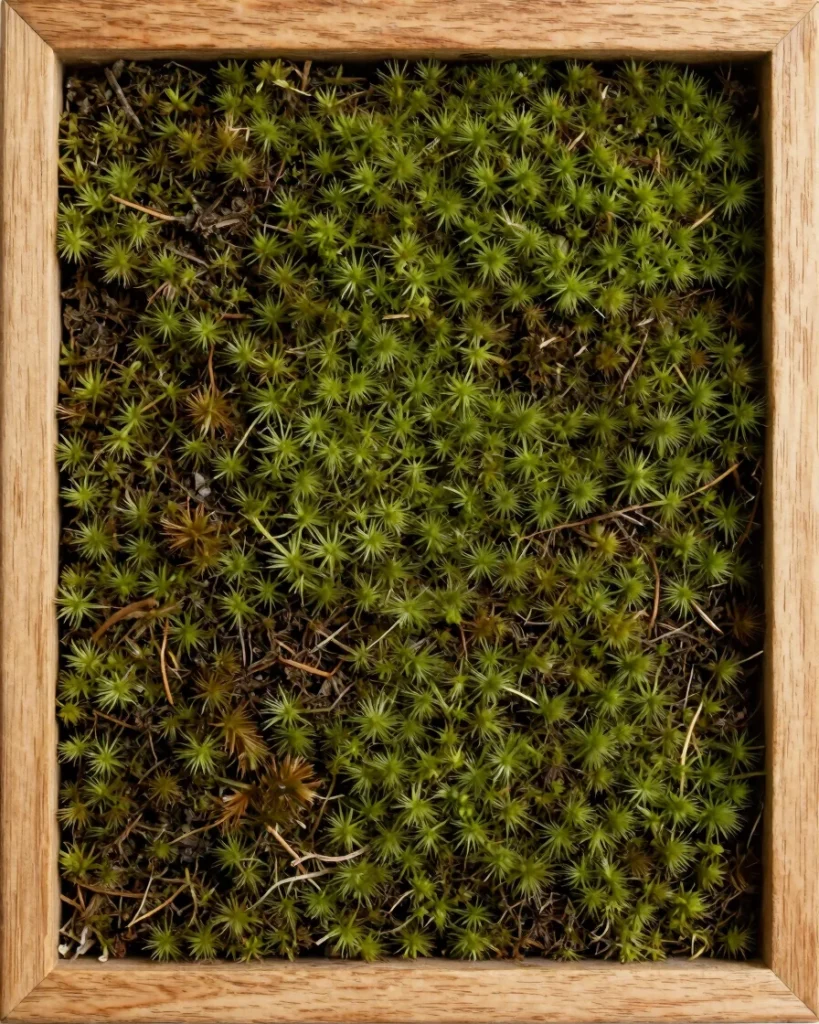
Look for pieces that use high-quality preservation methods. The moss should feel soft, not crunchy, and should not have a strong chemical smell. If the moss looks dusty or faded in the product photos, it may not be fresh.
Consider the maintenance: preserved moss needs no water, but it does benefit from occasional dusting with a soft brush or a gentle puff of air from a distance. Avoid using water or cleaning sprays, as moisture can cause the preservation treatment to break down. Keep the piece out of direct sun and away from humid areas like bathrooms unless the frame is sealed.
Finally, trust your eye. The best moss wall art is the one that feels right in your space. With a basic understanding of the moss types available, you can make a confident choice that will stay looking good for a long time.